Hréð 🏆
hyhtes giefend
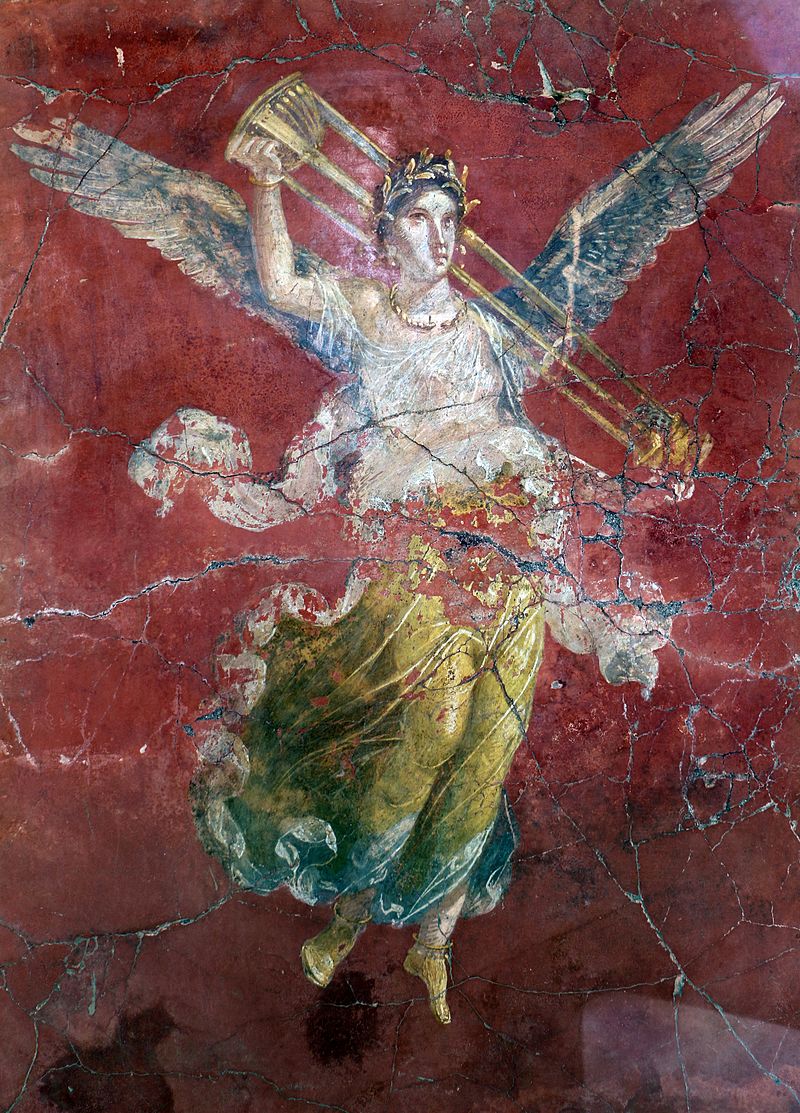
Hréð is an enigmatic figure whom we know from only one 8th century mention. However, using linguistics and comparative analysis of different textual sources, we can identify this deity as a goddess potentially associated with glory, triumph, and victory, especially victory over the harshness of winter.
— C. Ryan Moniz
winter mmxxiii
updated harvest mmxxiii

Disclaimer: This piece merely reflects my own understanding of this deity based on my research and experiences.
Bede records❦1 that the Old English name for March, ⟨Hredmonath⟩, is so named because a goddess ⟨Hreda⟩ was celebrated during that time. The exact form of the goddess’ name is unclear, though it appears to be related either to words meaning ‘glory, triumph’ (parallelling her with Mārs, for whom March is named) or ‘harsh, severe’ (most likely in reference to winter weather).❦2
There are many other variants of the name for March given by Bede, each potentially pointing to a different etymology; these etymologies are suggestive of March activities, features of winter weather, or liberation from said weather.
Another common name for March, Hlýda, is also attested as a personified (masculine) figure, whose name means ‘noisy one’ or ‘noise-maker.’❦3
A metrical charm refers to bees as ‘victory-women,’ which may allude to honeybees overcoming the winter weather in potential parallel to Hréð.
In addition to Mārs, Hréð also finds parallels in Roman and Romano-British❦4 Victōria as well as Celtic Andraste, the latter of which also has ties to the month of March; another vernal figure associated with both Mārs and the victory over winter is the Slavic death goddess Morana.❦5
🍂 Notes
- ❦1. Bodleian Libraries 2023
- ❦2. Grimm (1835) also notes the existence of a possibly cognate Old High German feminine name Hruada.
- ❦3. This name survived even into the 20th century as Lide (French 1929).
- ❦4. Collingwood & Wright 1965
- ❦5. Kempiński 2000
📚 Bibliography
- 🔖 Bodlein Libraries 2023· “Medieval Manuscripts in Oxford Libraries,” medieval.bodleian.ox.ac.uk
- 🔖 Collingwood, RG & Wright, RP (ed) 1965· RIB: The Roman Inscriptions of Britain
- 🔖 French, CN 1929· A Countryman’s Day Book Anthology
- 🔖 Grimm, J 1835· Deutsche Mytholgie
- 🔖 Kempiński, AM 2000· Encyklopedia mitologii ludów indoeuropejskich
- 🔖 Matasović, R 2009· Etymological Dictionary of Proto-Celtic
- 🔖 Rix, H (ed) 1998. Lexikon der indogermanischen Verben